See what your body is actually carrying.
A simple, non-invasive scan of your palm. No blood draw, no waiting days for results. We go through your full results together, and I give you supplementation suggestions tailored to exactly what your body is asking for, not a generic protocol.
Before your scan: please have your blood type, weight and height ready, along with your date of birth. The scan is calibrated to you with these.

Light, read through your skin.
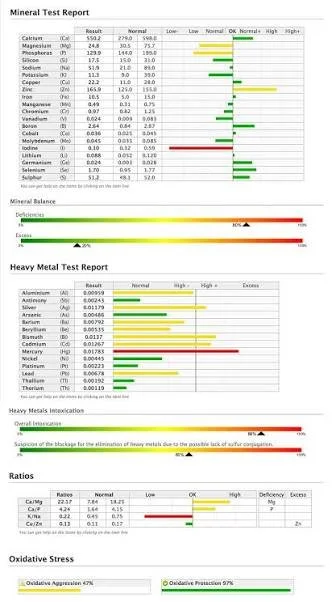
The Oligoscan uses spectrophotometry, measuring light absorption through the skin, to assess mineral levels, toxic metal exposure and oxidative stress directly in your tissue, not just what's circulating in your blood.
Results are available immediately, and can be tracked over time to monitor real change.
- 20 minerals and 14 toxic metals
- Oxidative stress
- A full reading together, with food, supplement and cell salt suggestions
This test is for educational purposes only, complementary to, not a replacement for, other medical testing.
Book
Choose a time in Chatham, NY, or the Berkshires, MA (Great Barrington, Lenox).
Bring
Your date of birth, blood type, height and weight, so the scan can be calibrated to you.
Read
We go through every result together, and you leave with your personal suggestions.
Scanned elements.
Open each list for a short note on what every element does in the body.
20 minerals
Calcium (Ca): found mainly in the bones; also has a role in the transmission of nerve impulses, muscle contraction, coagulation and oxygen delivery to tissues.
Magnesium (Mg): present in all cells and especially in the bones; involved in the bone framework and normal functioning of the nervous and muscle systems. Operates in over 300 enzyme processes.
Phosphorus (P): structural role with calcium, mainly in the skeleton; important for acid-base balance and the storage and transfer of energy (ATP).
Silicon (Si): a constituent of bones, hair, nails, cartilage and skin; important in the biosynthesis of collagen, elastin and hyaluronic acid.
Sodium (Na): maintains the water balance of the body and the functioning of muscles and nerves.
Potassium (K): with sodium, maintains acid-base balance; allows nerve impulses and muscle contraction.
Copper (Cu): vital to many enzymes; bones, cartilage and iron metabolism; stimulates the immune system.
Zinc (Zn): a cofactor of 200 enzymatic reactions; growth, immunity, neurological function and many hormones.
Iron (Fe): fundamental in the formation of hemoglobin, myoglobin and many enzymes.
Manganese (Mn): carbohydrate metabolism, coagulation, skeleton formation and the fight against free radicals.
Chrome (Cr): forms glucose tolerance factor; role in lipid metabolism.
Vanadium (V): thyroid function and bone metabolism.
Boron (B): sex hormone levels and maintaining the skeleton.
Cobalt (Co): a component of vitamin B12.
Molybdenum (Mo): elimination of certain products of protein digestion.
Iodine (I): thyroid hormones: thermoregulation, metabolism, reproduction, growth and the nervous system.
Lithium (Li): the functioning of nerve cells.
Germanium (Ge): tissue oxygenation.
Selenium (Se): glutathione peroxidase, a vital antioxidant; immune system and thyroid.
Sulfur (S): tissue synthesis and toxin elimination.
14 toxic metals
Aluminum (Al): partly responsible for certain diseases of the nervous system and irritable bowel syndrome.
Antimony (Sb): presumably carcinogenic (WHO group 2B); disrupts protein and carbohydrate metabolism.
Silver (Ag): research on silver nanoparticles is contradictory; ecotoxicity studies show biological effects.
Arsenic (As): prolonged exposure can cause skin lesions and pigmentation changes; carcinogenic.
Barium (Ba): digestive, muscle, heart and neurological effects; chronic exposure affects breathing and blood pressure.
Beryllium (Be): chronic exposure can cause lung granulomatosis; can alter DNA.
Bismuth (Bi): high doses may cause serious neurological disorders.
Cadmium (Cd): toxic to the kidneys, skeleton and respiratory system.
Mercury (Hg): considered by the WHO as extremely dangerous to the nervous, digestive and immune systems, lungs and kidneys.
Nickel (Ni): allergies are very common, usually through contact dermatitis.
Platinum (Pt): can irritate the respiratory tract, lungs and skin.
Lead (Pb): a serious WHO concern, with adverse effects on the brain and central nervous system.
Thallium (Tl): highly toxic, competes with potassium; digestive, neurological and cardiac symptoms, hair loss.
Thorium (Th): exists only in radioactive form; affects lungs, bone marrow and gonads.
Part of Burnout to Brilliance.
A full Oligoscan reading is included in the 8-week Burnout to Brilliance program, so your remineralization and your remedies work together.
Explore the program